



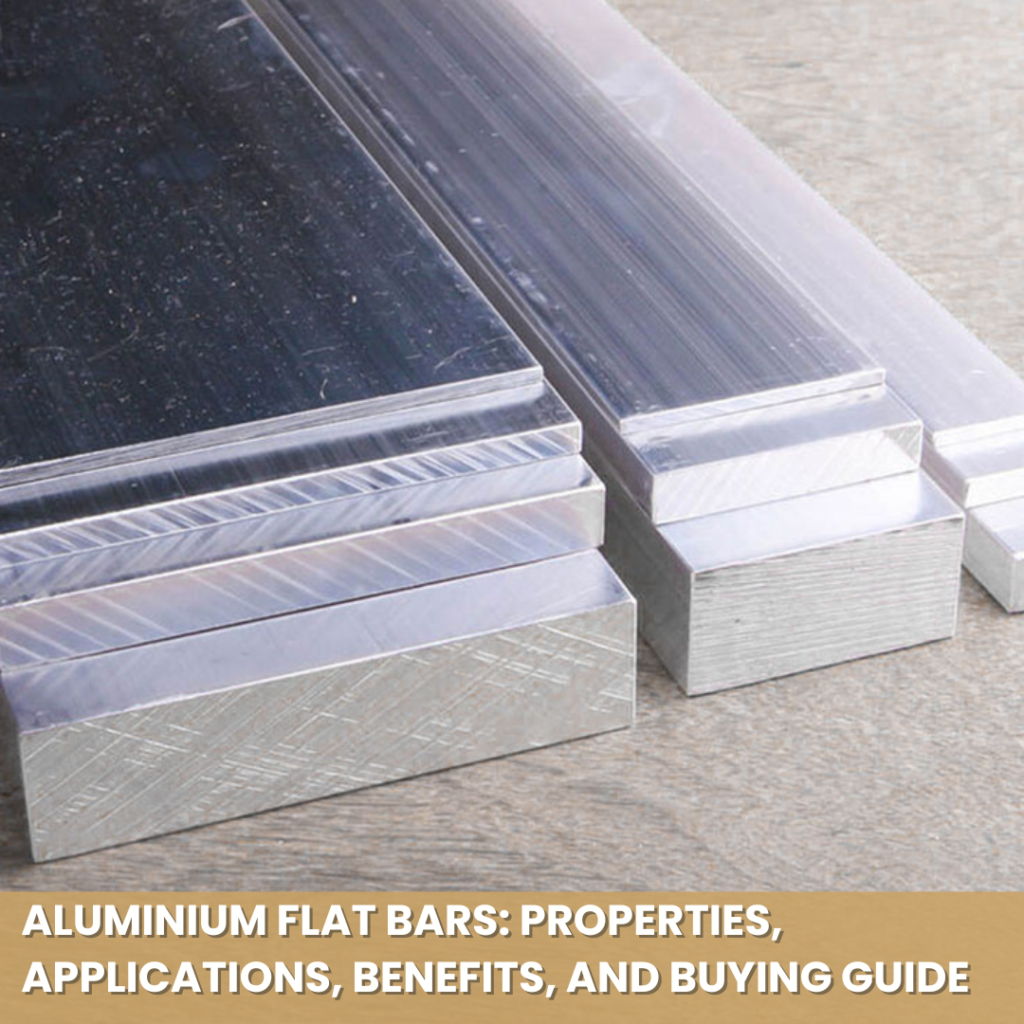
Aluminium flat bars are one of the most versatile and widely used aluminium products across multiple industries. Known for their excellent strength-to-weight ratio, corrosion resistance, and ease of fabrication, aluminium flat bars play a critical role in construction, engineering, transportation, and manufacturing sectors. Their flat, rectangular cross-section makes them ideal for structural support, machining, and custom fabrication.
In this blog, we explore what aluminium flat bars are, their key properties, common applications, advantages, available grades, and how to choose the right aluminium flat bar for your project.
What Are Aluminium Flat Bars?
Aluminium flat bars are solid aluminium products with a uniform thickness and width, typically supplied in straight lengths. They are produced through extrusion or rolling processes and are available in various sizes, alloys, and tempers to meet different industrial requirements.
These flat bars offer a clean finish, precise dimensions, and excellent mechanical properties, making them suitable for both structural and decorative applications.
Key Properties of Aluminium Flat Bars
Aluminium flat bars are preferred across industries due to the following properties:
Lightweight Yet Strong
Aluminium is significantly lighter than steel while offering impressive strength, making aluminium flat bars ideal for applications where weight reduction is essential.
Corrosion Resistance
Aluminium naturally forms a protective oxide layer, giving flat bars excellent resistance to corrosion, even in harsh environments such as coastal or industrial areas.
Excellent Machinability
Aluminium flat bars are easy to cut, drill, weld, and machine, allowing manufacturers to customize them for specific design and engineering needs.
Thermal and Electrical Conductivity
Aluminium has high thermal and electrical conductivity, making flat bars suitable for heat transfer systems and electrical applications.
Recyclability
Aluminium is 100% recyclable without loss of quality, making aluminium flat bars an environmentally responsible choice.
Common Grades of Aluminium Flat Bars
Aluminium flat bars are available in multiple alloys, each offering distinct characteristics:
Aluminium 1100 Flat Bars
Known for excellent corrosion resistance and high electrical conductivity. Commonly used in chemical processing and decorative applications.
Aluminium 6061 Flat Bars
A heat-treatable alloy offering good strength, weldability, and corrosion resistance. Widely used in structural and engineering applications.
Aluminium 6082 Flat Bars
Provides higher strength than 6061 and is commonly used in heavy-duty structural components.
Aluminium 7075 Flat Bars
A high-strength alloy used in aerospace, defense, and high-performance engineering applications.
Applications of Aluminium Flat Bars
Due to their versatility, aluminium flat bars are used in a wide range of industries:
Construction and Architecture
Used for frames, supports, brackets, and decorative elements in residential and commercial buildings.
Automotive and Transportation
Employed in chassis components, trailers, rail systems, and vehicle body structures to reduce weight and improve fuel efficiency.
Aerospace Industry
High-strength aluminium flat bars are used in aircraft components where precision and durability are critical.
Marine Applications
Thanks to their corrosion resistance, aluminium flat bars are ideal for boat structures, docks, and offshore equipment.
Electrical and Thermal Systems
Used in bus bars, heat sinks, and electrical enclosures due to aluminium’s excellent conductivity.
Industrial Manufacturing
Commonly used in machinery parts, tooling, jigs, and fixtures.
Advantages of Using Aluminium Flat Bars
Choosing aluminium flat bars offers several benefits over traditional materials:
- Reduced structural weight
- Long service life with minimal maintenance
- Cost-effective fabrication and installation
- High aesthetic appeal with smooth surface finish
- Excellent performance in extreme temperatures
These advantages make aluminium flat bars a preferred material for modern engineering and construction needs.
How to Choose the Right Aluminium Flat Bar
When selecting aluminium flat bars, consider the following factors:
- Alloy grade based on strength and corrosion requirements
- Dimensions such as width, thickness, and length
- Application environment (marine, industrial, structural)
- Fabrication needs like welding or machining
- Compliance with standards such as ASTM, EN, or IS
Consulting with a reliable aluminium manufacturer or exporter ensures you receive the right product for your application.
Conclusion
Aluminium flat bars are an essential material across modern industries due to their strength, lightweight nature, corrosion resistance, and adaptability. From construction and transportation to aerospace and electrical applications, aluminium flat bars offer unmatched performance and long-term value.
By selecting the right grade, finish, and dimensions, businesses can maximize efficiency, durability, and cost-effectiveness. Whether you require standard sizes or customized solutions, aluminium flat bars remain a dependable choice for a wide range of industrial and commercial applications.